

Bullet Train
- Sector – Infrastructure
- Location – Western Corridor, India
- India – 2019 onwards (ongoing)
Snapshot
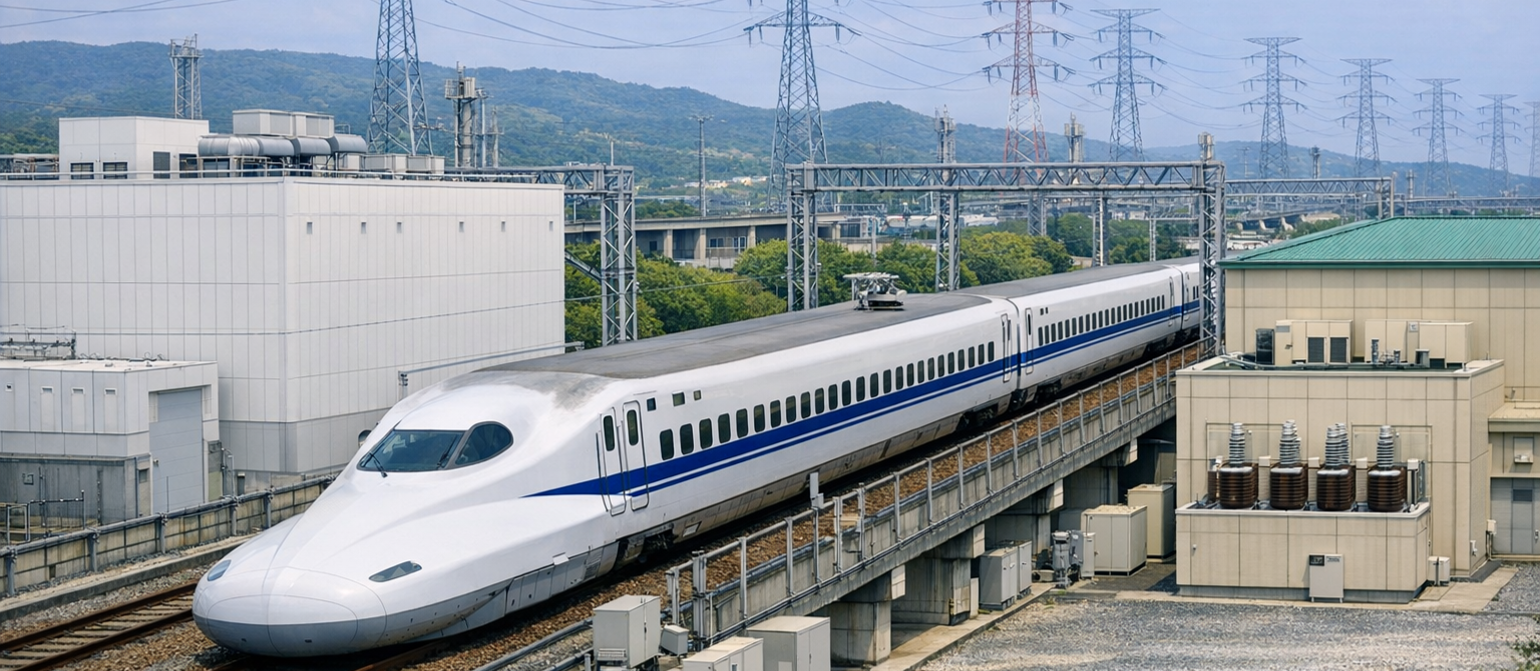
The Bullet Train Electrification Project represents one of India’s most ambitious infrastructure undertakings. Our scope focuses on the structural systems supporting electrification and power distribution along the high‑speed rail route. This includes 30‑metre tall steel pipe support structures, RCC substation buildings, and foundations for heavy equipment. Stations and depots where our work has been executed include Surat, Surat Depot, Bilimora, Vapi, Wadi Falia, and BKC Mumbai, among others. The project integrates durability, precision, and scalability to meet the demands of high‑speed rail electrification.
Challenge
The challenge was to deliver robust, tall structural systems capable of supporting electrification equipment across hundreds of kilometres, while ensuring safety against wind and seismic forces. The 30‑metre pipe structures demanded careful stability checks, while substation RCC structures had to accommodate heavy electrical equipment foundations. Coordination across multiple stations and depots added complexity, requiring consistency in design and execution.
Approach
The engineering strategy emphasized clarity and resilience. Steel pipe structures were designed with controlled slenderness ratios and foundation anchorage to resist overturning. RCC substation structures were aligned with equipment layouts to simplify installation and minimize clashes. Foundations were engineered for varied soil profiles, ensuring predictable performance. By standardizing detailing across stations, the team achieved efficiency in fabrication and construction sequencing.
Solution
- Structural steel pipe supports up to 30 m tall, designed for wind and seismic loads.
- RCC substation structures with clear grids for equipment housing.
- Foundations tailored for equipment loads and soil variability.
- Standardized detailing across stations to streamline fabrication and reduce site queries.
Impact
- Ease of construction: repetitive detailing allowed contractors to work with familiar systems.
- Reliability: tall pipe structures delivered consistent performance across varied geographies.
- Flexibility: standardized RCC grids simplified equipment installation and future upgrades.
- Structural challenges: slenderness of tall pipe supports required careful design against buckling; heavy equipment foundations demanded precise geotechnical coordination.
- Prestige: participation in India’s first bullet train project positioned the firm as a contributor to a nationally significant infrastructure milestone.
On site outcome
The project progressed smoothly across multiple stations, with minimal revisions and reliable sequencing. The result is a set of premium, buildable structural solutions that underpin the electrification of India’s first high‑speed rail corridor.
-
Paurin Mehta
9825173231
-
Japan Shah
9426401793